Our Dental Bridge Options
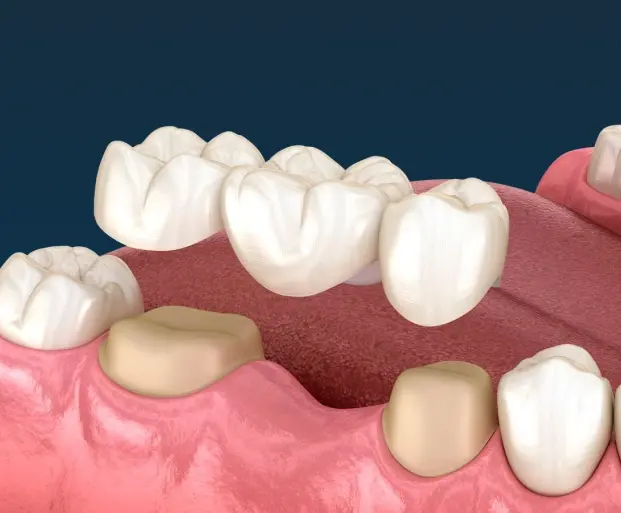
A dental bridge is a fixed restoration that replaces one or more missing teeth by anchoring a replacement tooth to the healthy teeth or implants on either side of the gap. At Smith Family Dentistry, we design each bridge to match the shape, size, and shade of your natural teeth, so the finished result blends in rather than stands out.
Replacing a missing tooth does more than improve appearance. When a gap is left open, the surrounding teeth can gradually drift out of position, which changes how your bite comes together and makes certain teeth harder to clean. A bridge holds everything in place while restoring your ability to chew and speak comfortably. Our Saginaw team will walk you through what a bridge involves and help you decide whether it is the right choice for your smile.
Schedule a ConsultationOur Dental Bridge Options
Not every gap calls for the same solution, so we offer several types of bridges depending on where the missing tooth is located and what condition the neighboring teeth are in. We provide:
- Traditional bridges: The most common option, using crowns on the healthy teeth on both sides of the gap to support a replacement tooth in the middle
- Cantilever bridges: Anchored to a healthy tooth on one side only, used when there is no suitable supporting tooth on the other side of the gap
- Maryland bridges: Held in place by a thin metal or porcelain framework bonded to the back of the adjacent teeth, which preserves more of the natural tooth structure
- Implant-supported bridges: Anchored to dental implants rather than natural teeth, often recommended when several teeth in a row are missing
Is a Dental Bridge Right for You?
The best restoration depends on how many teeth you are missing, the strength of the teeth surrounding the gap, and the health of the underlying bone and gum tissue. A bridge works well when the teeth on either side of the space are stable enough to carry the restoration, and it is often a good fit for patients who want a fixed option that stays in place rather than something removable.
Patients missing several teeth in a row, or those whose neighboring teeth are not strong enough to serve as anchors, may be better candidates for an implant-supported bridge or a partial denture. During your consultation, we will examine the area, take any images we need, and explain the trade-offs of each option so the decision is an informed one.
What to Expect During the Process
Getting a dental bridge usually takes two visits. At the first appointment, we prepare the supporting teeth by reshaping them so the crowns will fit securely, then take detailed impressions of your mouth. Those impressions go to a dental lab, where your bridge is custom-made to match your bite and the color of your surrounding teeth.
In the meantime, we place a temporary bridge so the prepared teeth stay protected and you are not left with a visible gap. At the second visit, we remove the temporary, check the fit and appearance of the permanent bridge, make any adjustments needed, and cement it into place.
Caring for Your Dental Bridge
A well-maintained bridge can last many years. Brush twice a day and floss daily, paying particular attention to the space underneath the replacement tooth, where food and plaque tend to collect. A floss threader or interdental brush makes this easier. It also helps to be mindful of very hard or sticky foods, which can put unnecessary stress on the restoration. Regular checkups at our Saginaw office allow us to monitor the supporting teeth and the fit of the bridge over time.
Ready to Complete Your Smile?
A missing tooth does not have to change the way you eat or smile. Call Smith Family Dentistry in Saginaw, MI, today to schedule a consultation and find out whether a dental bridge is the right fit for you.
Request an AppointmentFrequently Asked Questions
About Dental Bridges
With good daily care and regular checkups, most bridges last for many years. The lifespan depends largely on the health of the supporting teeth and how well the area around the bridge is kept clean.
Most bridges are completed in two appointments at our Saginaw office, one to prepare the teeth and take impressions, and one to fit and cement the permanent bridge.
Yes. Each bridge is made to match the shade and shape of your surrounding teeth, so it blends in with the rest of your smile.
The supporting teeth are numbed before they are prepared, so the appointment itself is comfortable. Some mild sensitivity afterward is normal and typically settles within a few days.
A bridge uses the neighboring teeth to support a replacement tooth, while an implant is placed directly into the jawbone. Our team at Smith Family Dentistry can explain which approach suits your situation.
Most patients return to eating comfortably within a short adjustment period. It is best to go easy on very hard or sticky foods to avoid putting extra stress on the restoration.
A floss threader or interdental brush lets you clean the space beneath the replacement tooth, which is important for keeping the supporting teeth and gums healthy. Our Saginaw, MI, team can demonstrate the technique at your appointment.