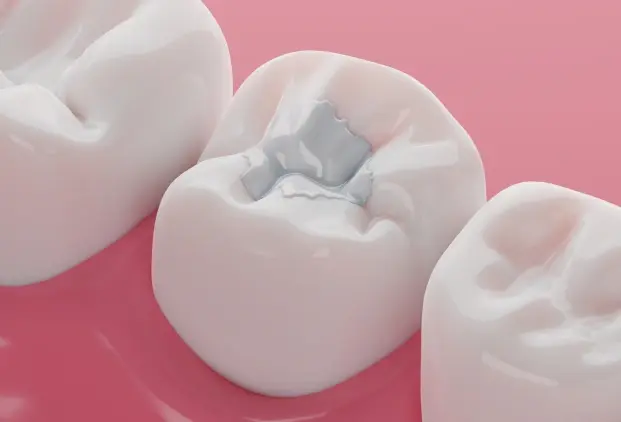
What Are Dental Fillings?
Cavities caused by oral acidity are repaired with dental fillings. A filling replaces the portion of a tooth that has decayed, sealing the area so bacteria and food particles can no longer get in and cause further damage. Fillings can also restore teeth that have been damaged by habits like cracking nuts with your teeth, bruxism, teeth grinding, or nail biting. In the end, our dentists will determine which kind of filling is most appropriate for your particular circumstance or tooth problem. If a filling alone isn’t enough to save the tooth, they may recommend placing a crown, bridge, or veneer instead.
Schedule a ConsultationDifferent Types of Fillings
The holes left behind by cavities can be filled using several materials, including gold, silver, porcelain, amalgam, plastics, glass ionomers, and composite resins. The type of filling material that is ideal for each circumstance is frequently determined by the location of the damaged tooth, the extent of the decay, the patient’s insurance coverage, the cost of the dental filling, and the recommendation of our dental team.
Why Are Dental Fillings Necessary?
Dentists use dental fillings to treat cavities because it closes the gap left by decay and protects the tooth going forward. Without a filling, microorganisms and tiny food particles can continue entering the damaged area, which may cause the decay to spread or, in more serious cases, lead to infection. Once an infection sets in, there’s a considerable possibility that a root canal will be needed to save the tooth.
What Happens During a Filling Procedure
Your filling treatment follows a straightforward process:
- Numbing the area: The dentist applies local anesthesia to keep you comfortable throughout the procedure.
- Removing the decay: Using a drill, the dentist carefully removes the decayed portion of the tooth, protecting it from further damage and leaving a clean surface to work with.
- Preparing the tooth: The treated area is cleaned and shaped to hold the filling material securely.
- Placing the filling: The dentist fills the treated area with the chosen filling material, replacing the portion of the tooth lost to decay.
- Shaping and polishing: The filling is shaped and polished to restore the tooth’s natural function and bite.
How Do You Know If You Need a Filling?
If you’re not caring for your teeth as well as you’d like, you may end up with a cavity. Lack of consistent dental hygiene, eating sugary foods, and frequent snacking can all contribute to cavities forming. If any of this sounds familiar, you could need a filling, and our team can confirm during an exam.
When Should You Get a Filling Replaced?
Most people will need at least one dental filling over their lifetime, so don’t be alarmed if our team recommends one during your routine dental checkup. Tooth sensitivity, a chipped or cracked tooth, black stains, and sharp pain are all signs that you may need a new filling or a replacement for an older one. Our dentist removes the decayed portion and fills the space to prevent further harm or the spread of decay to neighboring teeth.
The exact treatment depends on the type of filling and the nature of the damage, with gold, amalgam, composite, and porcelain among the most commonly used materials. We’ll have you in and out of the chair and back to your regular activity in a single visit.
Ready to Take Care of That Cavity?
Don’t wait for a small cavity to turn into a bigger problem. Call Smith Family Dentistry in Saginaw, MI to schedule your filling appointment and get back to feeling good about your smile.
Request an AppointmentFrequently Asked Questions
About Dental Fillings
Signs like tooth sensitivity, visible dark spots, or a chipped or cracked tooth can indicate a cavity. Our Saginaw, MI team can confirm during a routine exam.
Most patients feel little to no discomfort during a filling, since the area is numbed before the decayed portion of the tooth is removed.
Fillings can last many years depending on the material used and how well you care for your teeth, though they may eventually need to be replaced.
In most cases, yes, though we recommend waiting until any numbness wears off to avoid accidentally biting your cheek or tongue.
The right material depends on the location of the tooth, the extent of the decay, and your insurance coverage. Our team at Smith Family Dentistry will recommend the best option during your visit.
Yes, fillings can wear down or develop small cracks over time. Our Saginaw, MI dentists check the condition of your fillings at every routine checkup.
Untreated cavities can spread deeper into the tooth and potentially lead to infection, which may require a root canal to resolve.