If you have lost a tooth and started looking into replacement options, you have probably noticed a big gap in price. Dentures and bridges often cost less upfront, while dental implants saginaw patients ask about tend to carry a higher price tag. That gap can feel confusing, especially when you just want your smile back and your bite working right again.
The truth is, the cost difference is not random. It comes down to what an implant actually is, how it is placed, and what it does for your mouth over the next twenty or thirty years. As a dentist in Saginaw families have relied on for years, we talk with patients about this every week, and we want to walk you through it in plain terms so you can make a choice that fits your health, your budget, and your life.
What Tooth Replacement Options Actually Cost
Before we get into why implants cost more, it helps to see the full picture side by side. Bridges, dentures, and implants all solve the same basic problem, a missing tooth, but they solve it in very different ways.
| Feature | Dental Implant | Dental Bridge | Full or Partial Denture |
| Average lifespan | 20+ years, often a lifetime | 10 to 15 years | 5 to 10 years |
| Bone health | Preserves jawbone | Does not stop bone loss | Does not stop bone loss |
| Impact on nearby teeth | None, stands alone | Requires shaving down healthy teeth | Can put pressure on gums and teeth |
| Daily care | Brush and floss like a natural tooth | Special floss threaders needed | Daily removal and cleaning |
| Upfront cost | Higher | Moderate | Lower |
| Long-term cost | Often lower over time | Moderate, replacement needed | Can add up with relines and remakes |
Looking at this table, the higher starting price of an implant starts to make more sense. You are paying for something built to last, not something you will likely replace again in ten years.
Why Dental Implants Cost More Upfront
The Materials Are Built for the Long Haul
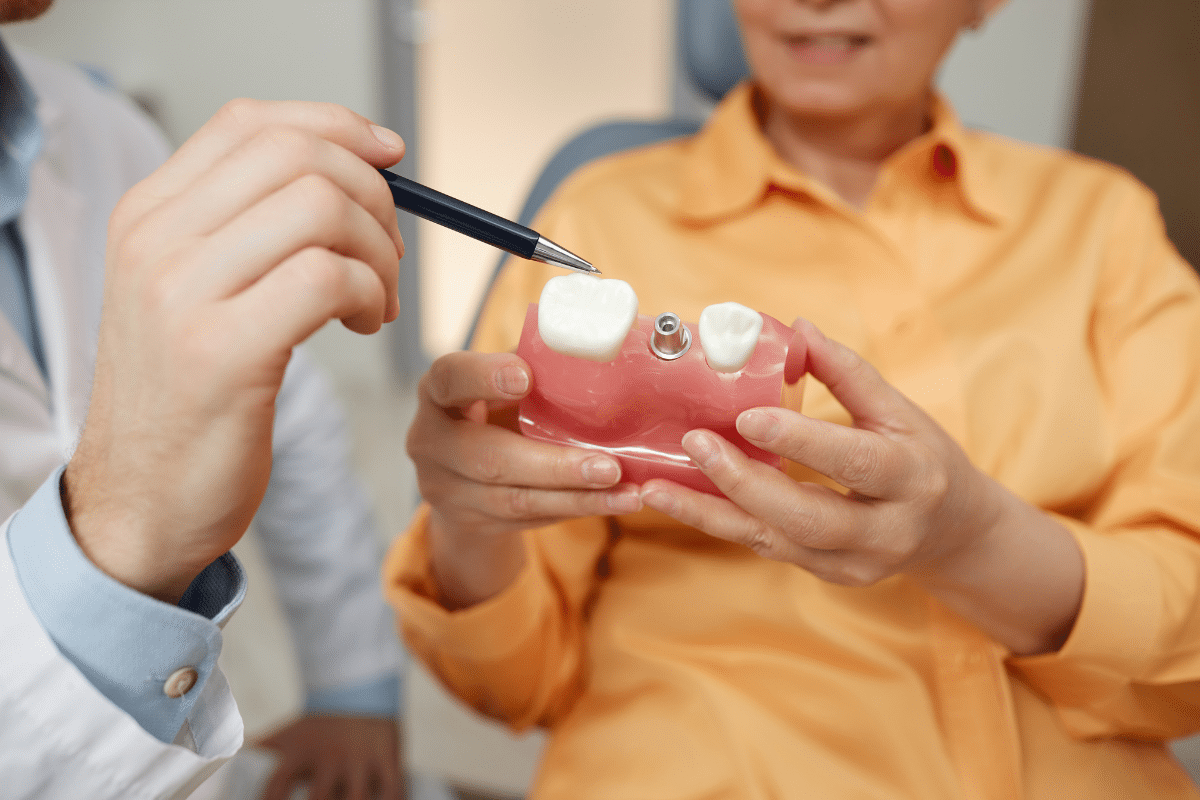
A dental implant post is made from titanium or zirconia, materials chosen because they fuse with living bone through a process called osseointegration. This is not a simple screw and crown. The post, the abutment, and the custom crown on top are each crafted with precision so your bite lines up correctly and the implant holds up to years of chewing pressure. Bridges and dentures use different materials that are less expensive to produce but also wear out faster.
The Procedure Requires Surgical Skill
Placing an implant is a surgical process. It involves careful imaging, planning around your nerves and sinuses, and a steady hand during placement. This takes specialized training beyond general dentistry, along with equipment like 3D imaging that many offices invest heavily in. That training and technology gets reflected in the price, but it is also what keeps the procedure safe and predictable.
More Appointments and More Healing Time
An implant is not a one visit fix. There is a consultation, sometimes a bone graft if your jaw has lost density, the surgical placement, a healing period of several months while the bone fuses to the post, and then the final crown. Each stage takes time from your dental team, and that time is part of what you are paying for. Bridges and dentures can often be completed in far fewer visits.
You Are Paying for What It Prevents
This part gets missed a lot. When a tooth is missing and nothing replaces the root, your jawbone starts to shrink in that spot. Over years, that bone loss can change your face shape and make future dental work harder and more expensive. An implant is the only replacement option that puts pressure on the bone the way a natural tooth root does, so it keeps that bone from wearing away. That is a real, physical benefit that bridges and dentures cannot offer.
The Long-Term Value Nobody Talks About
Here is where the math flips. A denture usually needs to be relined or remade every five to ten years as your gums and bone shift shape. A bridge typically lasts ten to fifteen years before the supporting teeth or the bridge itself needs attention. An implant, cared for with regular brushing and checkups, is designed to last decades, sometimes for life.
Price comparisons rarely tell the whole story on their own. When people search for dental implants saginaw pricing, they are often comparing sticker price alone. But if you add up what a denture or bridge might cost over twenty years, replacements and repairs included, implants frequently come out even or ahead. You are trading a bigger cost now for fewer costs, and fewer disruptions, later.
There is also the quality of life piece. Patients tell us implants let them eat the foods they love again, speak without worrying about slipping dentures, and smile without feeling self conscious. That is hard to put a number on, but it matters just as much as any spreadsheet.
Know Our Dentists
Choosing where to get a dental implant matters as much as choosing the implant itself. Anyone comparing dental implants saginaw providers should know exactly who will be doing the work. Here is who you will be working with at Smith Family Dentistry.
Dr. Curtis E. Smith, DDS, is a graduate of the University of Detroit Mercy School of Dentistry, where he earned his degree in 2001. After finishing school, he came back home to Saginaw to begin his career at the same practice he leads today. Dr. Smith works across restorative, cosmetic, and emergency dentistry, and he has served on the board of both the Saginaw Valley District Dental Society and the Saginaw County Dental Society. Outside the office, he has traveled on dental mission trips around the world and enjoys mentoring dental students who are just starting their own careers.
Dr. Molly McKenzie, DDS, grew up in the Keweenaw Peninsula and studied at Michigan Technological University before earning her dental degree from the University of Michigan School of Dentistry. Her training covered general dentistry, periodontics, oral surgery, and pediatric care, giving her a well rounded view of how oral health connects to overall health. Dr. McKenzie enjoys building long term relationships with patients and their families, and outside of work she spends her time bicycling, doing CrossFit, and exploring the outdoors around Lake Huron.
Together, this team brings both decades of hands on experience and fresh, current training to every implant consultation.
Our Patient Review
Reviews from real patients tell the story better than any marketing copy can.
“I have been going here as far back as I can remember and I can tell you there is no better staff to work with. Everyone who works there really cares about the patients and is very good at their jobs. I’ve never had one complaint and they always make me feel like one of the family there. I highly recommend them to everybody. They always make sure that you are comfortable and as pain free as you can possibly be. A real asset to the Saginaw area!” ★★★★★ — (Lynette D)
Feedback like this reflects the kind of careful, patient first approach our team brings to every procedure, whether it is a first checkup or a full implant consultation.
Making the Decision That Fits Your Life
Cost is a real factor, and we never want to brush past that. Many patients ask about payment plans, financing options, or how dental insurance applies to implants, since coverage varies quite a bit from plan to plan. For general background on implant procedures and what the American Dental Association recommends for care and maintenance, their patient resource library at ada.org is a solid, trustworthy place to start. The National Institute of Dental and Craniofacial Research also publishes plain language guides on tooth loss and bone health that many patients find useful while weighing their options.
Every mouth is different, and pricing should reflect that. If you are a dentist in saginaw patients trust for straight answers, that conversation should start with your specific mouth, not a generic price list. Bone density, gum health, how many teeth are missing, and your daily habits all shape what a fair estimate looks like for you. A short consultation can tell you more than an hour of searching online ever will.
Ready to Talk Through Your Options?
Missing teeth do not get easier to deal with the longer you wait, and bone loss only continues in the meantime. If you are weighing dental implants saginaw families have trusted for years against a bridge or denture, let’s sit down and look at your mouth specifically.
Smith Family Dentistry has served the Saginaw community since 1980, and as your local dentist in Saginaw, Dr. Smith and Dr. McKenzie are ready to walk you through every option, cost included, with zero pressure. Visit our dental implants page or our full services page to learn more, or reach out through our contact page to contact our dental office and take the next step toward a smile that lasts.
Frequently Asked Questions
1. How long does the entire implant process take from start to finish?
It varies by patient, but most cases run three to eight months total. That covers healing time after placement, which allows the implant to properly fuse with your jawbone before the final crown goes on.
2. Does dental insurance ever cover part of an implant?
Some plans cover portions of the procedure, especially the crown or the initial exam, while others classify implants as cosmetic and cover very little. It is worth calling your insurance provider directly to ask about your specific policy.
3. Is the implant surgery painful?
Most patients describe the recovery as similar to a tooth extraction, with some swelling and soreness for a few days. Local anesthesia is used during the procedure itself, so patients do not feel pain while it is happening.
4. Can older adults still get dental implants?
Age by itself is not a barrier. What matters more is having enough healthy jawbone and being in reasonably good general health, which your dentist can evaluate during a consultation.
5. What happens if I do not have enough jawbone for an implant?
A bone graft can often rebuild the area enough to support an implant later. This adds time to the process but does not rule out implants as an option.
6. How do I take care of an implant once it heals?
Care is simple, brush and floss just like you would a natural tooth, and keep up with regular checkups so your dentist can monitor the implant and surrounding gum tissue.
7. Are same day implants a real option?
In select cases with strong existing bone, a temporary crown can sometimes be placed the same day as surgery. Your dentist will let you know if you are a candidate after an exam.
8. What is the biggest risk of skipping tooth replacement altogether?
Beyond the gap in your smile, an empty space allows nearby teeth to shift out of position and speeds up bone loss in the jaw, which can complicate future treatment and change your bite over time.