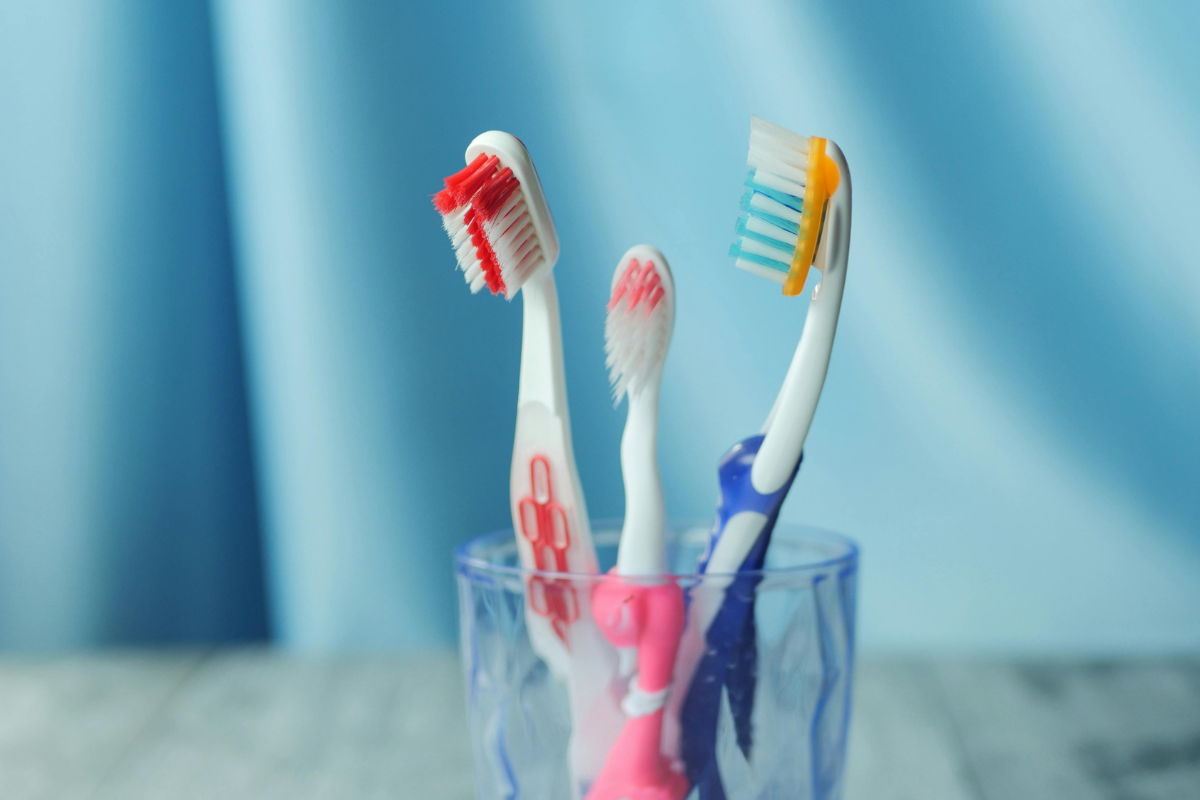
Your toothbrush works hard twice a day. Any dentist in saginaw hears the same question each week: how often should I replace it? The answer is every three to four months, or sooner if the bristles look worn. This guide shows you how to tell.
Our team at Smith Family Dentistry sees worn brushes every week. As a saginaw dentist on State Street, we keep a simple checklist for spotting them. You can use it at home in under a minute.
The Short Answer
- Replace manual brushes every 3 to 4 months.
- Replace electric brush heads on the same schedule.
- Replace any brush sooner if the bristles bend, flare, or fray.
- Replace it after a bad illness, such as strep throat.
The American Dental Association (ADA) gives this same 3 to 4 month guideline on its MouthHealthy site (mouthhealthy.org).
Why an Old Brush Cleans Poorly
Bristles are the whole tool. When they bend and splay, they stop reaching the spots where plaque hides, like the gumline and the grooves of back teeth. Plaque left behind can harden into tartar, and that leads to cavities and gum trouble.
A worn brush also holds more germs. Damp bristles used for months are a poor place to put your mouth twice a day.
7 Signs Your Brush Is Done
1. The bristles flare out
Look at your brush from the front. If the bristles spread like a flower, it is time.
2. The bristles lean to one side
This often comes from pressing too hard.
3. The color has faded
Many brushes have blue or colored bristles that fade as they wear. Use this as a built-in timer.
4. It has been more than three months
Even if it looks fine, the bristles lose their stiffness and shape.
5. You were sick
Swap it out once you feel well again.
6. Your gums feel sore or bleed after brushing
Rough, frayed bristles can irritate the gums.
7. Your teeth feel less clean
If that smooth, clean feeling fades, the brush may be the cause.
Worn Brush vs New Brush
| What to Check | Worn Brush | New Brush |
| Bristle shape | Bent, flared, or frayed | Straight and even |
| Cleaning power | Misses plaque near the gumline | Reaches gumline and back teeth |
| Germ buildup | Higher after months of use | Low |
| Feel on gums | Rough or scratchy | Soft and gentle |
| Typical age | Over 3 to 4 months | Under 3 months |
How Long Each Brush Type Lasts
| Brush Type | Replace Every | Good to Know |
| Manual adult brush | 3 to 4 months | Check the bristles each month |
| Electric brush head | About 3 months | Many heads have color indicators |
| Child’s brush | 2 to 3 months, or sooner | Kids chew and press harder |
| After an illness | Right away | Start fresh once you recover |
Make Your Brush Last Longer
Good care keeps a brush clean until its replacement date.
- Rinse it well with tap water after each use.
- Store it upright and let it air dry.
- Skip closed travel cases for daily storage. Trapped moisture helps germs grow.
- Keep it away from other brushes so the heads do not touch.
- Never share a brush with anyone.
- Brush for two minutes, twice a day, with fluoride toothpaste.
The ADA’s Seal of Acceptance on a brush or toothpaste means the product has met its safety and effectiveness standards. The Centers for Disease Control and Prevention (CDC) also lists fluoride toothpaste and twice-daily brushing as key habits for preventing cavities.
Soft, Medium, or Hard?
Choose soft bristles. They clean well and protect your gums and enamel. Hard bristles do not clean better. They can wear down enamel and push gums back over time. If you brush hard by habit, an electric brush with a pressure sensor can help.
When a New Brush Is Not Enough
Sometimes a fresh brush does not fix the problem. See a dentist if you notice:
- Gums that bleed for more than a week or two
- Bad breath that does not go away
- Tooth pain or sensitivity to hot and cold
- Loose teeth or gums that look like they are pulling back
These can point to gum disease or decay that brushing alone cannot reach. If this sounds like you, book a visit with a dentist in saginaw who can find the cause and plan the next step.
Our office is open Monday through Thursday, 7 a.m. to 3 p.m. That helps when you want to fit a visit in before or during the workday. Cold and flu season runs long in Michigan, so it is smart to keep a spare brush on hand for after you recover.
Know Our Dentists
Brushing habits are easier to fix with a person who explains things clearly. Here are the two doctors you will meet at Smith Family Dentistry.
Dr. Curtis E. Smith is a Saginaw native. He earned his DDS from the University of Detroit Mercy School of Dentistry in 2001, then returned home to start his career at our office. He has served on the boards of the Saginaw Valley District Dental Society and the Saginaw County Dental Society. He has also provided care on dental and medical mission trips around the globe and mentors dental students, including through the University of Michigan’s Victors for Veterans program. Whether the concern is routine, cosmetic, or urgent, he focuses on care that fits the person in the chair.
Dr. Molly McKenzie graduated from the University of Michigan School of Dentistry in 2025. She studied general dentistry, gum care, oral surgery, and pediatrics there. She grew up in the Keweenaw Peninsula and studied at Michigan Technological University. She is a member of the American Dental Association and the Michigan Dental Association, and has volunteered to treat underserved patients in Michigan and abroad. Dr. McKenzie likes to connect oral health to overall health, and she works to make each visit comfortable. If you want a family dentist in Saginaw who can walk you through brushing and flossing, both doctors are glad to do it.
Quick Checklist
- Look at your brush today. Are the bristles bent or flared?
- Mark a date on your calendar for three months from now.
- Keep a spare brush at home for after you are sick.
- Switch to soft bristles if you use hard ones.
- Book a checkup if your gums bleed or your teeth hurt.
Frequently Asked Questions
1. Can I just rinse my toothbrush with mouthwash to make it last?
No. Rinsing with water and air drying is enough. Mouthwash does not restore worn bristles.
2. Do electric brush heads wear out faster than manual brushes?
They wear at a similar pace. Replace the head about every three months, or when the indicator bristles fade.
3. Should I replace my toothbrush after a cold?
It is a good idea after a bad illness like strep throat. For a mild cold, a fresh brush is an easy way to be safe.
4. How do I know if I am brushing too hard?
Check for bristles that lean to one side, or gums that look red or sore. A soft brush and light pressure help.
5. Is it safe to share a toothbrush with my spouse or child?
No. Sharing passes germs from one mouth to another. Give everyone their own brush.
6. Can a toothbrush sanitizer replace buying a new brush?
No. Sanitizers do not fix bent or frayed bristles. Replacement is still needed on schedule.
7. How often should kids get a new brush?
Every two to three months is common, and sooner if the bristles flatten.
8. Does a more expensive brush last longer?
Not necessarily. Price does not change how quickly bristles wear. Follow the 3 to 4 month rule for any brush.
Final Thoughts
A fresh toothbrush is one of the cheapest ways to protect your smile. Check the bristles, watch the calendar, and replace the brush whenever it looks tired. If you want a trusted Saginaw dentist to check your gums and teeth, Smith Family Dentistry welcomes new and returning visitors.
Ready for a checkup? Request an appointment with smith family dentistry. If you need a dentist in Saginaw for a cleaning, a gum check, or a question about your brushing routine, we are ready to help.